Spice Jars Explained: How to Store, Organize, and Preserve Your Spices Properly

You don’t notice it at first. The food still looks good. The recipe is the same. You followed every step. But something feels… off.
The flavor doesn’t hit the way it should.
Most people think their spices are just “getting old.”
But the truth is simpler and slightly frustrating:
Your spices are being ruined by your kitchen.
Not because your kitchen is messy.
Not because you don’t care.
But because no one ever taught you how spice storage actually works.
And once you see it, you can’t unsee it.
Why Proper Spice Storage Actually Matters
Here’s the part most people get wrong:
Spices don’t “spoil” the way milk or meat does.
They lose power.
Flavor. Aroma. Depth.
That rich, warm, slightly sharp smell you expect from your spices?
That’s what disappears first.
And the reason comes down to three quiet enemies:
1. Heat
Heat speeds up the breakdown of essential oils in spices.
Translation: your spices lose their flavor faster.
That cute rack next to your stove?
It’s slowly killing your seasoning.
2. Light
Direct light fades both color and flavor.
If your spices look dull, they probably taste dull too.
3. Air
Every time air gets in, your spices oxidize.
Which means weaker flavor every time you open them.
Now think about most kitchens:
- Spices near the stove
- In clear plastic containers
- Opened constantly without proper sealing
It’s not your cooking.
It’s your system.
READ: Why Investing in Good Spice Jars Saves You Money in the Long Run
Types of Spice Jars (And Which One Is Actually Worth It)
Let’s clear the confusion because not all spice containers are created equal.
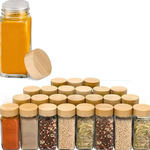
Glass Spice Jars (Best Overall)
If you’re serious about preserving flavor, this is it.
- Non-reactive
- Doesn’t absorb smell
- Keeps spices stable longer
- Looks clean and elevated
This is where functionality meets aesthetics.
You’re not just storing spices. You’re upgrading your kitchen experience.
Plastic Containers
They’re everywhere. And they’re cheap.
But here’s the trade-off:
- They absorb odors over time
- They stain
- They don’t preserve flavor as well
They work for short-term use. Not for a long-term system.
Metal Tins
They block light well, which is great.
But:
- You can’t see what’s inside
- You’re more likely to forget what you have
Good for storage. Not great for daily use.
Magnetic Spice Jars
They look cool. Very Pinterest.
But let’s be honest:
- Often placed near heat
- Small capacity
- More aesthetic than practical
They work in very specific setups. Most people force them into kitchens where they don’t belong.
Quick Verdict
- Best for freshness: Glass jars
- Best for aesthetics: Glass jars in organized systems
- Best for small kitchens: Drawer-based glass systems
Notice a pattern?
The Right Way to Store Spices (Step-by-Step System)
This is where most people overcomplicate things.
You don’t need a perfect kitchen. You need a working system.
Step 1: Choose Airtight Containers
Not “cute.” Not “matching.”
Airtight.
If air gets in, flavor gets out. It’s that simple.
Step 2: Pick the Right Location
This alone will change everything.
Best places:
- Inside cabinets
- Inside drawers
- Pantry shelves
Worst place:
- Anywhere near your stove
It’s convenient, yes.
But it’s also the fastest way to kill your spices.
Step 3: Control Moisture Exposure
This is the silent killer.
Ever shaken spices directly over a steaming pot?
That steam travels up… and settles inside your jar.
Over time:
- Clumping
- Flavor loss
- Faster spoilage
Small habit. Big impact.
Step 4: Label Everything
You think you’ll remember.
You won’t.
Labeling does three things:
- Prevents duplicate buying
- Helps track freshness
- Makes your kitchen feel intentional
And that last one matters more than people admit.
Spice Organization Systems (Based on Real Life)
Forget perfection. Let’s talk about what actually works.
Drawer Organization (Clean, Minimal, Effective)
Flat-lay jars inside a drawer.
- Easy to see everything at once
- No digging
- No clutter
This is the system that feels calm. Controlled. Effortless.
Cabinet Organization
Use:
- Tiered racks
- Step shelves
So you can actually see what’s at the back.
Because if you can’t see it, you won’t use it.
Countertop Display
Looks beautiful online.
But here’s the truth:
- Only works if away from heat and light
- Best for frequently used spices only
Otherwise, it’s just slow damage disguised as decor.
The Minimalist System (Micro Organization)
This is where things get interesting.
Instead of storing everything together:
- Keep daily-use spices accessible
- Store the rest separately
This creates flow.
You stop overbuying.
You start using what you have.
And your kitchen starts working with you, not against you.
How to Preserve Spice Freshness for Longer
Let’s go deeper.
Whole vs Ground Spices
Whole spices last longer. Period.
- Whole spices: up to 3–4 years
- Ground spices: 1–2 years
Why?
Less surface area exposed to air.
If you want next-level flavor, grind fresh when you can.
Buy Smaller Quantities
This is where people mess up.
Buying in bulk feels smart.
But if you’re not using it quickly, you’re just storing future flavor loss.
Smaller amounts = fresher spices.
Store Based on Usage, Not Just Space
The spices you use daily should be:
- Easy to reach
- Easy to see
Everything else can be stored deeper.
That’s how you build a kitchen that flows.
How to Tell If Your Spices Have Gone Bad
Spices won’t make you sick.
But they will disappoint you.
Here’s how to check:
1. No Smell
If you open it and nothing hits you… it’s done.
2. Faded Color
Bright spices = fresh spices.
Dull color = lost potency.
3. Clumping
Moisture got in.
And once that happens, quality drops fast.
Quick Test
Crush a little between your fingers.
Smell it.
If it’s weak, your food will be too.
Common Spice Storage Mistakes (That Ruin Everything)
Let’s call them out directly:
- Storing spices near heat
- Keeping them in original packaging long-term
- Buying too many at once
- Not sealing jars properly
- Holding onto spices for years
None of these feel like big mistakes.
But together? They completely flatten your cooking.
The Netai Kitchen System™: Why Spice Jars Are Just the Beginning
Here’s the shift most people haven’t made yet:
Spice jars are not the goal.
They’re part of a system.
When your kitchen is built in layers:
- Spice jars
- Oil dispensers
- Acrylic storage
- Pantry organization
Everything starts to connect.
You cook faster.
You waste less.
You enjoy the space more.
And suddenly, your kitchen isn’t just functional.
It feels intentional.
That’s the difference between random upgrades… and a lifestyle system.
FAQs
Can spices go bad?
Not in a dangerous way. But they lose flavor over time.
Should spices be refrigerated?
No. Moisture and condensation can damage them.
Are glass jars better than plastic?
Yes. They preserve flavor longer and don’t absorb odors.
How do you store spices in a small kitchen?
Drawer systems or compact cabinet organizers work best.
What’s the best way to store spices in humid climates?
Use airtight glass jars and keep them away from steam and heat.
Final Thoughts: It’s Not About Storage. It’s About Flow.
You don’t need a bigger kitchen.
You don’t need more space.
You need a system that works.
Because when your spices are stored properly:
- Your food tastes better
- Your kitchen feels calmer
- Your habits become easier
And it all starts with something small.
A jar.
But not just any jar.
The right one, in the right place, for the right reason.