Your Kitchen Isn't Small. It's Just Badly Organized

There's a specific Sunday evening feeling that Nairobi kitchens create.
You've just come back from the supermarket or the market. Bags on the floor. Fresh new ingredients to put away. And you open the one cabinet you have and realize there's no logical place for any of this.
So you stack things. You pile. You tuck the new packets behind the old ones and tell yourself you'll fix it later.
Later never comes.
And by Wednesday, you're ordering food again. Not because you're lazy. But because your kitchen made cooking feel harder than it needed to be.
If you live in Nairobi, you know this kitchen. A counter that ends before you've finished chopping. One drawer is doing the work of five. No pantry, just a cabinet that's quietly overwhelmed.
This isn't a storage problem. It's a systems problem.
And a kitchen that doesn't have a system, is a kitchen you won't want to use.
The Nairobi Apartment Kitchen Is a Unique Challenge
Let's be clear about something most organizing content won't tell you.
The advice online is written for kitchens that look nothing like yours.
Wide countertops. Deep pantries. Multiple drawers. Dedicated spice racks. Islands with built-in storage.
That's not Nairobi. That's not a one-bedroom in Hurlingham or a studio in Westlands where the kitchen is functionally one wall of your living space.
The challenge here is specific:
- Countertops that are narrow and often shared with a gas burner, a kettle, and whatever landed there last
- One drawer, maybe two, that has to hold cutlery, cooking tools, foil, bags, and miscellaneous items with nowhere else to go
- Overhead cabinets that are deep but poorly organized, so things disappear into the back
- No pantry, which means dry goods, spices, oil, and snacks are competing for the same shelf space
- Limited natural light, which makes cluttered spaces feel even smaller and more stressful
The solution isn't to move, renovate, or buy new furniture.
The solution is to build a system that works within the space you actually have.
Why Most Small Kitchen Fixes Don't Work
People go into organizing with the wrong goal.
They want it to look organized.
What they actually need is for it to work organized. Those are different things.
A kitchen that looks good on a Sunday afternoon but breaks down by Tuesday isn't organized. It's staged.
Real organization means that when you're cooking at 7pm after a full day, things are exactly where you expect them to be. No searching. No shuffling. No reorganizing mid-prep.
That kind of kitchen doesn't happen by accident. And it doesn't require extra furniture. It requires systems and the right containers to support them.
The Tools That Actually Transform a Small Kitchen
Here's where most advice goes wrong. They tell you to declutter, label, and "find a home for everything" without telling you what that actually looks like in a 70-square-foot kitchen with two shelves and a dream.
These are the specific products that do the work.
Glass Spice Jars
Spices are one of the biggest sources of visual chaos in Nairobi apartment kitchens.
Think about it: you have pilipili hoho, coriander, turmeric, cumin, mixed spice, paprika, and ten others all in different-sized packets, all stored differently, all creating a jumbled shelf that makes you hunt every time you cook.
Glass spice jars solve this with one move.
Transfer everything into matching jars. Same size. Same shape. Same lid. Suddenly, your spice shelf goes from chaotic to calm. You can see everything at a glance. You know when you're running low. You stop buying duplicates of things you already have.
The jars are stackable. They line up neatly. And because they're glass, they don't absorb smells or stain the way plastic does.
Available at Netai Home: from KES 1,800. Delivered to your door across Nairobi.
The spice jar set is part of our Kitchen Ritual collection within the Netai Living System™ a room-by-room framework designed to help you create homes that feel as good as they look.

Acrylic Storage Containers
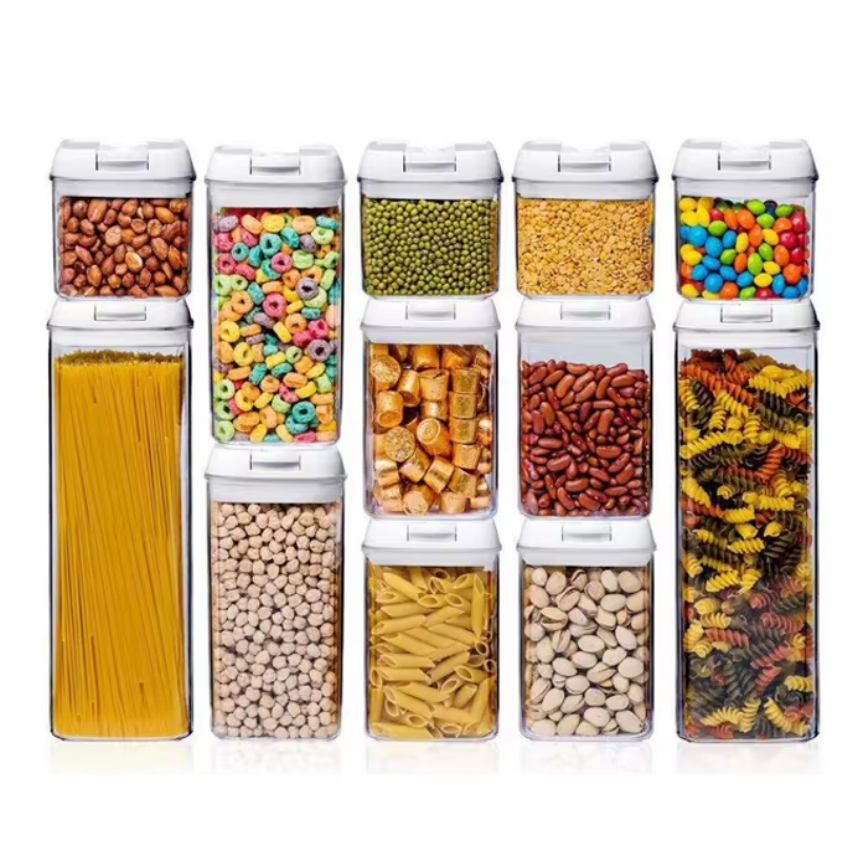
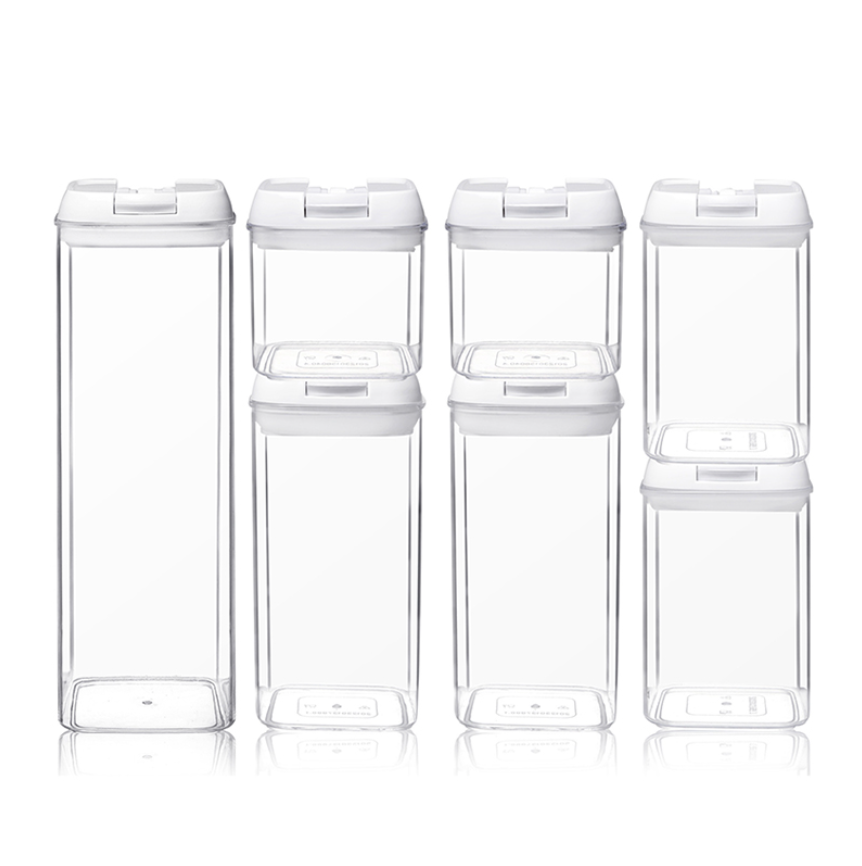
For dry goods rice, pasta, flour, sugar, cereals, oats acrylic containers are the most practical solution for Nairobi apartment kitchens.
Here's why:
They're clear, so you see exactly what you have. No opening five containers looking for lentils.
They're lightweight, which matters when your shelves are overhead, and you're pulling things down daily.
They stack, which turns dead vertical space into usable storage, the most underused asset in a small kitchen.
They're not glass, so if one tips and falls, it doesn't shatter across your kitchen floor at 6am.
The visual consistency is also important. When your containers match, the shelf stops looking cluttered even when it's full. It looks intentional.
Available at Netai Home: from KES 2000. Delivered across Nairobi, Kilimani, Kileleshwa, Westlands, and beyond.
A Drawer Organizer (For the One Drawer Doing Too Much)
The single drawer in most Nairobi apartment kitchens is carrying an impossible burden.
Forks. Knives. A spatula. Foil. A random rubber band. Takeaway menus you've never read. Two batteries that may or may not work.
A simple drawer organizer divides this space into zones. Cutlery in one section. Cooking tools in another. Small packets and sachets in their own compartment.
You open the drawer and find what you're looking for in under two seconds. Every time.
That's not a small thing. That's the difference between cooking feeling easy and cooking feeling like effort before you've even started.
The Five Zones of a Nairobi Small Kitchen
Here's the mental shift that makes everything work.
Stop thinking of your kitchen as one space. Start thinking of it as five zones, each with a specific purpose, each organized separately.
Even in the smallest kitchen, these zones exist. You just need to define them.
Zone 1: The Dry Goods Shelf
This is your pantry equivalent.
Rice, pasta, flour, sugar, cereals, legumes. Everything that lives in a container.
Use your acrylic storage containers here. Same sizes where possible. Stack them. Label them. This shelf should take you ten seconds to read and understand.
Zone 2: The Spice Station
This is where most Nairobi kitchens lose the battle.
A dedicated spice area, one shelf, one tier of a cabinet, or even a small section of counter, changes how you cook.
When spices are organized and visible, you actually use them. You season more. You cook more confidently. The food gets better.
Use your glass spice jars here. Line them up. It should look almost too neat.
Zone 3: The Active Counter
This is the small stretch of counter you actually cook on.
The rule here: only what you use daily, lives here.
Kettle. Salt. Cooking oil. Maybe one cutting board.
Everything else leaves. The counter is not storage. It's workspace.
This single discipline creates more breathing room in a small kitchen than anything else.
Zone 4: The One Drawer
Covered above but the principle is simple.
Divide it. Zone it. Don't let it become a catch-all.
Zone 5: The Overhead Cabinets
These are the most underused, most frustrating part of a Nairobi apartment kitchen.
Deep shelves where things disappear. You stop seeing what's at the back, so you buy duplicates, or you stop using entire food categories.
The fix: pull-out bins or acrylic containers placed front to back, not stacked randomly. You should be able to see the front row and reach the back row without disturbing everything else.
How to Reset Your Kitchen (Step by Step)
This is the Reset Ritual.
Not a full weekend renovation. Not a Pinterest project. A focused, two-to-three-hour process that you do once and then maintain weekly in fifteen minutes.
Step 1: Pull everything out
Every shelf. Every drawer. Everything on the counter.
Don't organize what you're not sure you need.
Step 2: Edit ruthlessly
Expired spices. Old packets you've had for two years. Containers with no lids. Bags of things you can't identify.
Out.
Step 3: Group what remains
Before touching a single container, group your items by category on the counter or table.
Spices together. Dry goods together. Cooking tools together. Snacks together.
This shows you what you actually have and how much space each category really needs.
Step 4: Assign zones
Using the five zones above, decide where each category lives.
Write it down if you need to. The goal is that every item has exactly one home.
Step 5: Transfer and contain
Dry goods into acrylic containers. Spices into glass jars. Drawer items into organizer sections.
Label where needed.
Step 6: Place intentionally
Most-used items closest to where you use them. Daily spices near the stove. Cooking tools near the counter.
Not just organized. Organized logically.
Step 7: Take a photo
This is the baseline. When things drift, and they will, this photo is how you reset.
Common Mistakes People Make in Small Kitchens
Organizing Without Editing First
If you organize clutter, you just have tidy clutter.
Declutter before you organize. Always.
Buying Containers Before Knowing What You Have
This is the most expensive mistake.
Measure your shelves. Group your items. Know your volumes. Then buy.
Treating the Counter as Storage
Every item on your counter that doesn't need to be there is stealing workspace from you.
And in a small Nairobi kitchen, workspace is the most valuable thing you have.
Mixing Container Styles
Random containers look like random containers, no matter how clean they are.
When containers match same lid, same style, same material the shelf reads as one cohesive system, not a collection of individual items.
Organizing Once and Walking Away
Systems need maintenance.
Every Sunday, spend ten minutes doing a kitchen reset. Put things back in their zones. Restock what's running low. Keep the counter clear.
This isn't extra work. It's the difference between a system that works and one that slowly falls apart.
This, by the way, is the mistake we mentioned at the start the Sunday reorganization that "never comes." The Reset Ritual is how that changes.
Frequently Asked Questions
How do I organize a small kitchen in a Nairobi apartment with no pantry?
Use your overhead cabinets as a pantry by installing a clear system within them. Acrylic storage containers with consistent sizing allow you to see and access everything without digging. Assign fixed zones; dry goods, spices, snacks and never mix categories on the same shelf.
What are the best containers for a small Kenyan kitchen?
Glass spice jars and acrylic storage containers are the most practical options. Glass jars are odour-resistant and long-lasting for spices. Acrylic containers are lightweight, shatterproof, and stackable ideal for dry goods on overhead shelves.
Can I organize my kitchen without spending a lot of money?
The highest-value investments are containers that create visual consistency: spice jars, a matching set of dry goods containers, and one drawer organizer. These three purchases transform the most problematic zones in a small kitchen without requiring new furniture or renovation.
How do I stop my small kitchen from looking cluttered?
The counter is the first thing you see and feel. Keep only daily-use items on it. Everything else should have a home on a shelf, in a drawer, or in a cabinet. Visual clutter almost always comes from counter overflow not from too little storage.
How often should I reorganize my kitchen?
A proper reset is a one-time event. After that, a 10-minute weekly tidy is enough to maintain the system. The goal is a system so logical that things naturally return to their zones without effort.
The Deeper Shift: Why Kitchen Organization Changes How You Eat
Here's what nobody tells you about organizing a small kitchen.
It changes what you cook.
When your spices are visible, you season differently. When your dry goods are front and centre, you actually use them. When the counter is clear, you're more willing to start cooking at 7pm instead of ordering delivery.
This is the Reset Ritual and it's not really about the kitchen.
It's about reclaiming your relationship with home cooking in a way that works for a Nairobi life. A busy week. A small space. A home that has to do more with less.
When your kitchen flows, something quieter shifts too.
You start cooking for yourself more. You waste less food. You feel more in control of your week. The home starts to feel like yours not just a space you sleep in.
That's the real return on a two-hour reset and a set of matching containers.
Where to Start
You don't have to do all of this at once.
Pick one zone. The spice shelf is usually the highest-impact place to begin, visible, daily-use, and immediately transformative.
Get the glass spice jars. Transfer your spices. See how the shelf changes.
Then build from there.
Shop the Netai Home Storage & Organisation Collection →
🫙 Glass Spice Jars — 12-Piece Set → 🫙 Glass Spice Jars — 24-Piece Set →
You might also like:
→ The Ultimate Guide to Kitchen Organization
→ Why Investing in Good Spice Jars Saves You Money in the Long Run
Because the goal isn't just an organized kitchen. It's a kitchen that makes you want to cook in it.
Netai Home — Elevate Everyday Living.